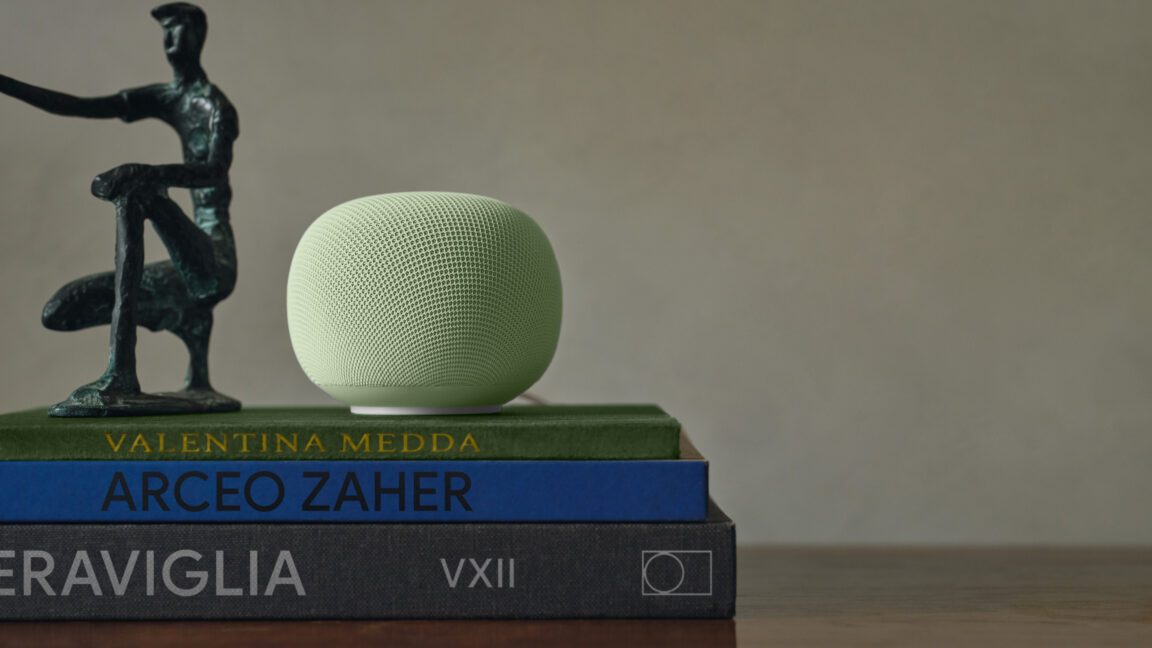
Google has opened preorders for its redesigned Home speaker, a device that prioritizes AI assistant capabilities over audio fidelity. The speaker, priced at $100, launches roughly ten months after initial announcement.
The new Home speaker centers on Google's Gemini AI assistant rather than competing on sound quality with premium speakers from competitors like Apple or Amazon. Google's strategy reflects the industry shift toward AI-first devices, where voice interaction and contextual understanding matter more than raw speaker performance.
This approach contrasts with Google's earlier Home speaker generations, which emphasized audio quality and design. The ten-month gap between announcement and preorder availability suggests supply chain challenges or last-minute software refinements to ensure Gemini integration meets expectations. Google has not disclosed why the delay occurred.
The timing arrives as smart speakers face broader market skepticism. Consumer adoption has plateaued in mature markets, with many households already owning multiple voice assistants. Google's bet on Gemini aims to justify upgrades by offering more conversational, nuanced AI interactions compared to simpler voice command systems.
Preorder availability suggests production is ramping up. The speaker targets users already embedded in Google's ecosystem, particularly those using Gemini for work or creative tasks. Integration with Android devices, Google Home automation, and other Nest products provides the real value proposition.
Price positioning at $100 places the speaker between budget options and premium audio devices. This undercuts Apple's HomePod mini ($99) while remaining above Amazon's Echo Dot, signaling Google targets mainstream adoption rather than high-end audio enthusiasts.
The delayed launch raises questions about execution. Competitors have shipped AI-enhanced speakers without similar delays, and Google's history with hardware deadlines remains uneven. Preorder momentum will indicate whether ten months of development translated into genuine consumer demand or whether the market has moved on to alternative AI interfaces like ChatGPT-powered