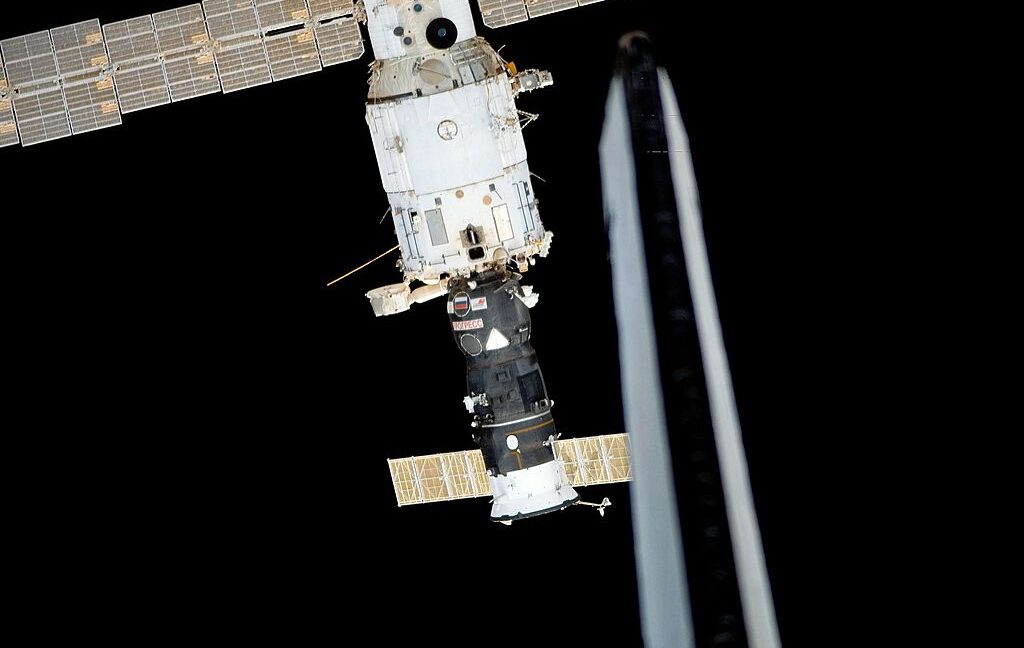
Russia appears ready to tackle structural damage aboard the International Space Station that has troubled both agencies for years. The Soyuz spacecraft's service module, which provides propulsion and life support for the Russian segment, has developed cracks that threaten its long-term viability.
The damage emerged years ago but remained largely unaddressed due to disagreements between NASA and Roscosmos over repair methods and responsibility. Engineers detected micrometeorite impacts and manufacturing defects that gradually worsened, prompting concern about pressure integrity and potential depressurization risks.
Roscosmos has now signaled willingness to pursue repairs, marking a shift from previous reluctance. The service module is critical to ISS operations. It docks the Russian Soyuz vehicles that ferry crews to and from the station and manages attitude control for the entire orbital complex. A catastrophic failure could force evacuation and station abandonment.
The repair timeline and specific methodology remain unclear. Engineers must balance safety with operational continuity. Any major maintenance work requires careful scheduling around crew rotations and scientific operations. Roscosmos will likely conduct external inspections and assess structural stress levels before committing to repair plans.
The dispute reflected broader tensions over ISS partnership responsibilities. NASA wanted aggressive maintenance; Roscosmos initially resisted due to technical and budgetary constraints. Years of diplomatic pressure and growing recognition of the risk appear to have shifted Moscow's position.
This development matters for station sustainability beyond 2030, when current ISS agreements face potential renegotiation. A fully operational Russian segment strengthens the case for continued partnership rather than unilateral American extension. The US has proposed extending ISS operations to 2030 or beyond, while Russia previously signaled openness to shorter timelines.
Addressing these cracks removes a significant threat to mission confidence. Station partners can now focus on science and exploration rather than managing emergency