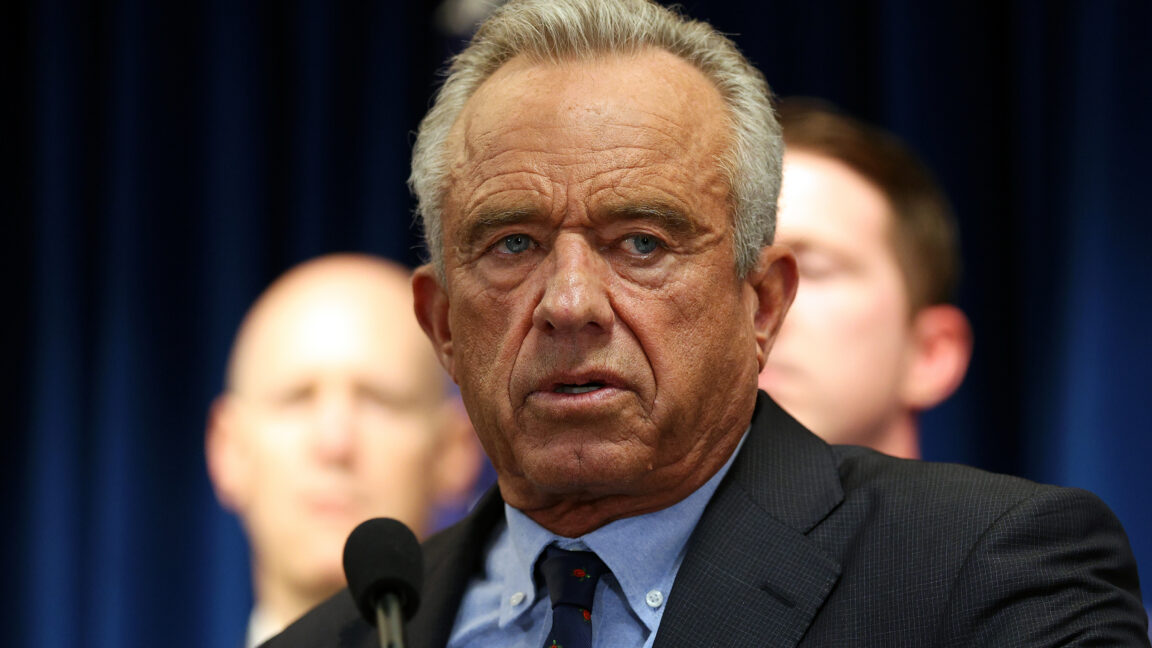
Robert F. Kennedy Jr. responded to a New York Times report about his disengagement from certain policy areas by publicly admitting he maintains a blacklist of journalists. The admission undermines his own defense against the original reporting.
The Times had published a story suggesting Kennedy was disconnected from key briefing materials and decision-making processes. Rather than refuting the substance of the claim, Kennedy lashed out at the outlet, revealing in the process that he actively blocks certain reporters from access.
Kennedy's response played out publicly in a manner that observers noted actually reinforced the Times' characterization. His defensive reaction, combined with the blacklist disclosure, demonstrated the exact behavior the article had described: a disengaged approach to institutional processes and an inability to respond constructively to critical coverage.
The blacklist revelation raises questions about press access and transparency in Kennedy's operations. Journalists traditionally gain access to government officials and policy figures through established channels. Maintaining a secret list of barred reporters functions as a mechanism for controlling narrative rather than engaging with scrutiny.
The episode illustrates a broader pattern in how Kennedy has handled public criticism. Rather than engaging substantively with reporting or providing detailed refutation with facts, he has responded with personal attacks and institutional gatekeeping. The Times story reportedly detailed Kennedy's unfamiliarity with briefing materials on various policy domains, raising questions about his operational readiness.
Kennedy's acknowledgment of the blacklist happened without apparent strategy. The admission came during a confrontational exchange that escalated rather than de-escalated the situation. His team did not frame the blacklist as a necessary measure or explain the reasoning behind it. The uncontrolled response suggests exactly the kind of disorganized decision-making the Times had described.
The incident offers a textbook example of how defensive overreach can validate criticism. Kennedy's own words provided evidence supporting the Times' original reporting without requiring the outlet to produce additional documentation or