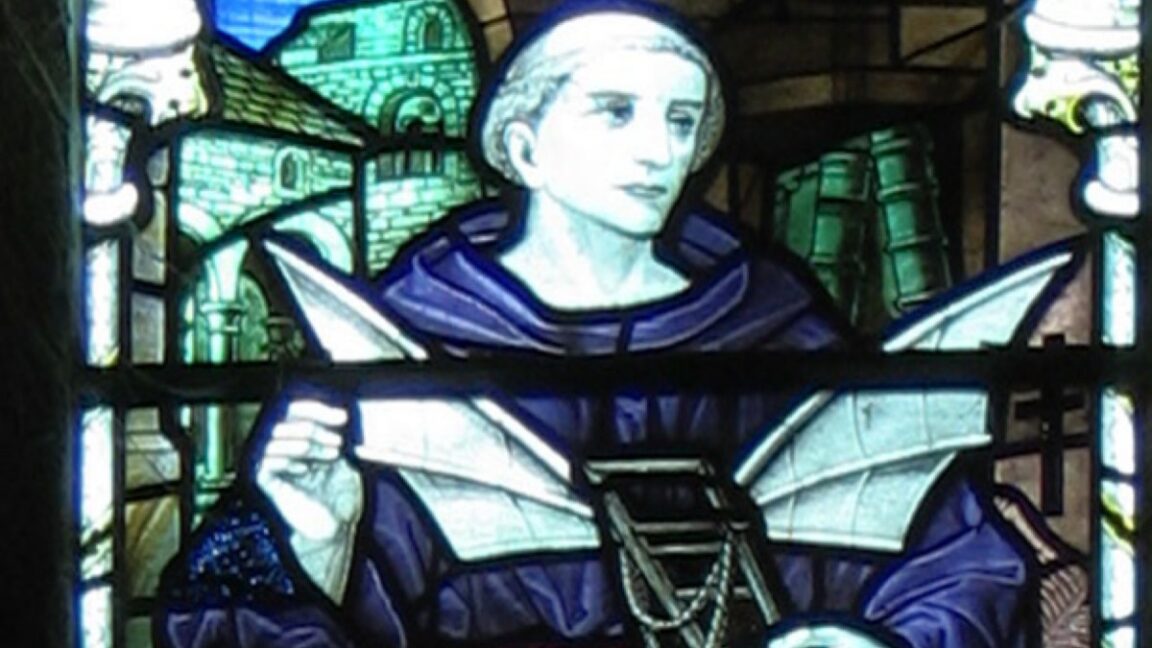
A University of Leicester historian argues that Eilmer of Malmesbury, an 11th-century English monk, observed two separate comets rather than the same comet twice, challenging centuries of astronomical interpretation.
Eilmer, a Benedictine monk known for attempting to fly with homemade wings around 1010, documented celestial observations in medieval chronicles. Historical records describe him witnessing a "hairy star" in the sky, and scholars long assumed he spotted Halley's Comet during its 1066 apparition. The prevailing narrative suggested Eilmer may have also seen it decades earlier in 1018.
The Leicester researcher's analysis reveals complications with this tidy historical account. Halley's Comet follows a roughly 76-year orbital period, making simultaneous sightings in both 1018 and 1066 impossible if the same comet. The evidence suggests Eilmer encountered two entirely different comets at different points in his life.
Medieval chroniclers wrote vague descriptions of such phenomena. Eilmer's accounts lack the precise dating and detailed observations modern astronomy requires to definitively match historical sightings with specific celestial objects. The monk's records provide tantalizing hints but frustrate attempts at certainty.
This reassessment matters because it demonstrates how modern historians must carefully parse medieval sources. What seems straightforward in old chronicles dissolves under scrutiny. Eilmer's flying experiment ended badly, breaking both legs when he jumped from a church tower. His astronomical observations carry similar hazards for interpretation, proving far less reliable than his physical courage.
The research illustrates a broader problem in archaeoastronomy. Historical records from preliterate or partially literate societies often conflate different events or misdate occurrences by decades. Halley's Comet remains one of astronomy's best-documented periodic visitors, yet even its