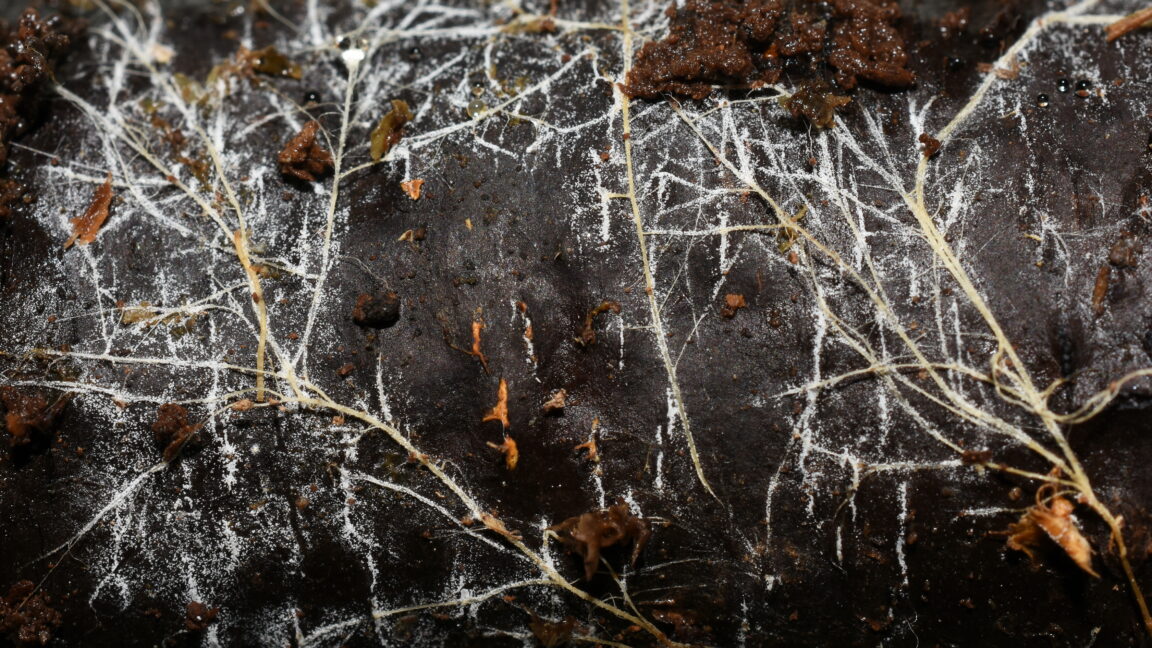
Researchers have measured the total extent of arbuscular mycorrhizal (AM) fungal networks that span the planet, reaching a staggering conclusion: the combined length of these underground filaments would stretch far beyond the Solar System if laid end to end.
Arbuscular mycorrhizal fungi form symbiotic relationships with plant roots, facilitating nutrient exchange in soil ecosystems. These threadlike structures, called hyphae, are invisible to the naked eye but collectively form one of Earth's largest biological networks. The study quantified the global distribution and biomass of these networks for the first time at scale.
The researchers used data from soil samples and existing mycological studies to extrapolate worldwide fungal network dimensions. Their findings reveal networks spanning approximately 604 million kilometers in total length. For context, the Solar System's boundary, the heliopause, lies roughly 122 billion kilometers from Earth. This means the theoretical combined length of AM fungal networks exceeds the distance to Pluto by orders of magnitude and approaches distances that rival the outer edges of our planetary neighborhood.
The biomass estimates prove equally striking. These fungal networks contain roughly 2.4 billion tons of carbon, making them a significant component of terrestrial carbon cycling. This hidden infrastructure influences nutrient availability, water retention, and soil structure across forests, grasslands, and agricultural systems worldwide.
The work underscores a fundamental reality: the most extensive biological networks on Earth operate beneath our feet, invisible and largely unnoticed. AM fungi connect approximately 80 percent of plant species to these networks, making them central to ecosystem function. Understanding their scale and distribution matters for predicting how climate change, soil degradation, and agricultural practices affect global ecosystems.
The research highlights a critical gap in how humans perceive planetary biology. While space exploration captures public imagination, equally vast systems operate in dirt. These fungal networks regulate nutri