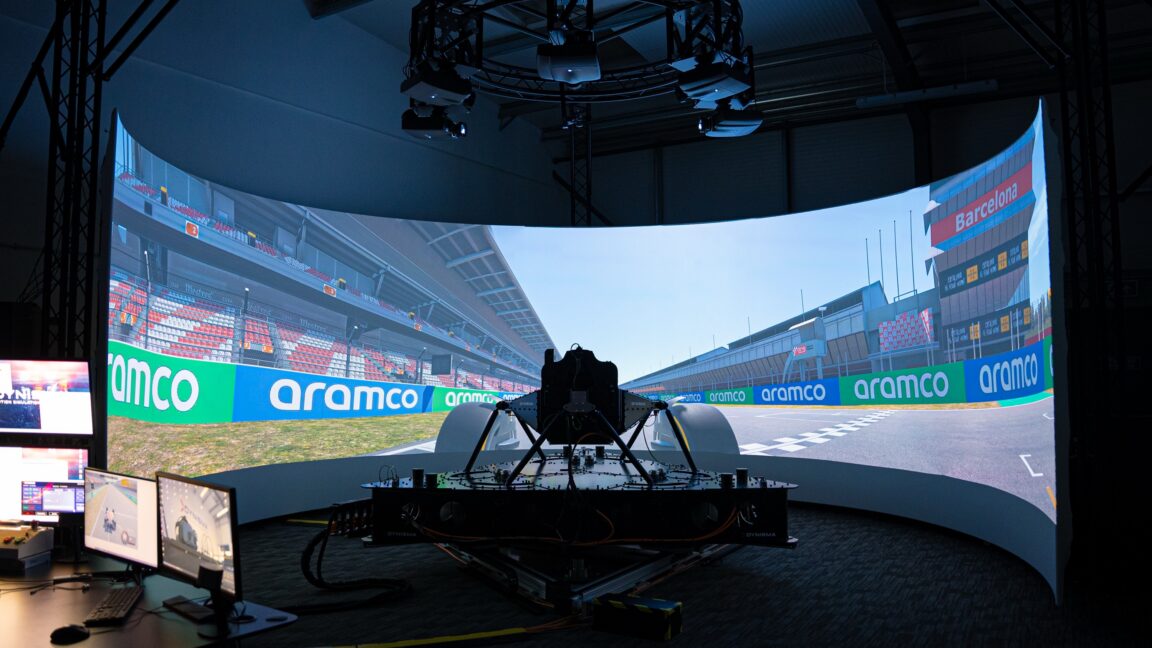
F1 teams invest millions in simulator technology because the performance gaps in racing come down to milliseconds. Unlike consumer racing games, professional simulators demand precision across three critical dimensions: latency, bandwidth, and fidelity.
Latency represents the delay between a driver's input and the simulator's response. In racing, even 20 milliseconds of lag can alter braking points and cornering lines enough to cost tenths of a second per lap. Top teams target latency below 10 milliseconds. This requires dedicated hardware, custom software stacks, and sometimes proprietary networks that bypass standard internet infrastructure entirely.
Bandwidth determines how much data flows between the driver's controls and the simulation engine. Professional rigs generate real-time telemetry from hundreds of sensors, feeding data about tire grip, aerodynamic forces, fuel consumption, and suspension behavior. This constant stream must update dozens of times per second without compression artifacts that degrade accuracy.
Fidelity means the simulation accurately reproduces actual car behavior. F1 teams use hundreds of gigabytes of track data, CAD models, and telemetry logs from real races to calibrate their simulators. They model tire degradation, fuel weight changes, and track temperature variations that shift grip levels throughout a session. A simulator worth $5 million to $10 million handles these variables with precision that $500 consumer setups cannot match.
Mercedes, Red Bull, and Ferrari operate multiple identical simulator rigs. Drivers spend 20 to 30 hours weekly in them during the off-season and race weekends. Teams use simulators to test setup changes before track sessions, develop new strategies, and onboard young drivers. The data collected feeds directly into engineering decisions.
The simulator advantage compounds. Better simulators produce more confident drivers and smarter setup choices. Teams that lag in simulator technology struggle to optimize their real cars within the limited practice