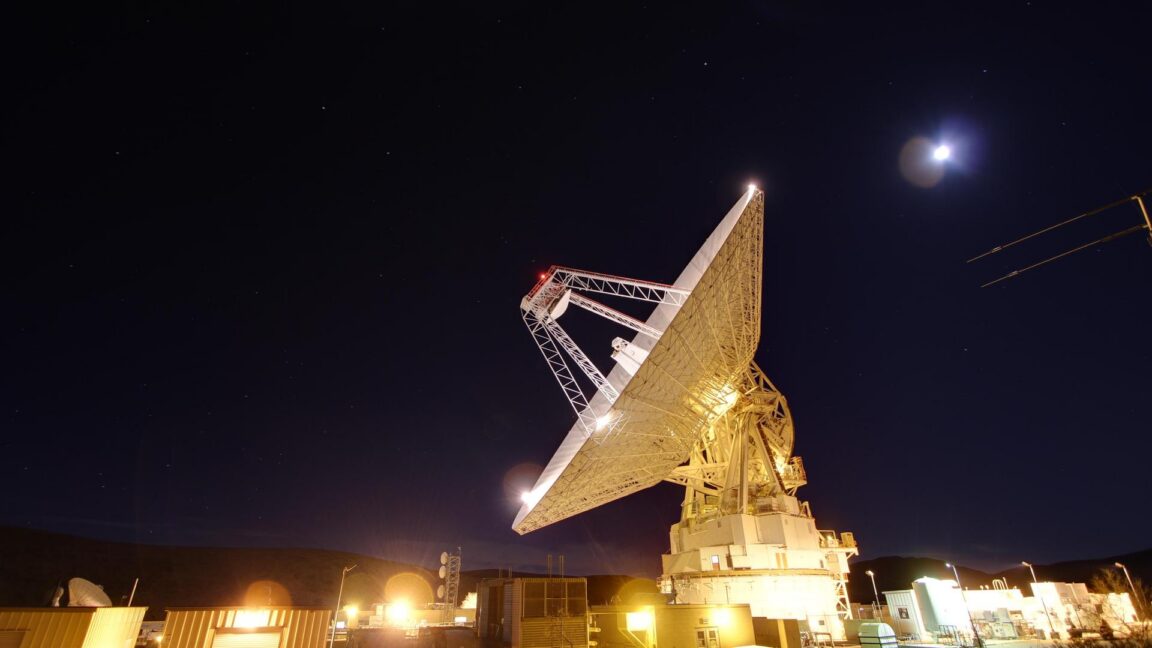
NASA's Deep Space Network, the global system of radio antennas that communicates with spacecraft beyond Earth orbit, strained under the demands of Artemis II but ultimately performed adequately. The network, which has operated continuously since 1963, faced unexpected pressure during the mission when some spacecraft required more communication bandwidth than their flight plans allocated.
The network consists of three major antenna complexes positioned around Earth: Canberra, Madrid, and Goldstone. Together they provide continuous coverage for deep space missions. During Artemis II, engineers discovered that certain missions were consuming more than their budgeted communication resources. "Some missions are using more than what their paperwork would say," according to Ars Technica's reporting.
The strain highlights an aging infrastructure problem. The Deep Space Network relies on hardware designed decades ago, and the volume of space traffic has intensified. More lunar missions, Mars rovers, and interplanetary probes now compete for antenna time simultaneously. NASA has invested in modernizing the system, but upgrades take years to complete and cost hundreds of millions of dollars.
The Artemis II mission pushed the network to its limits but did not cause critical failures. However, the experience revealed vulnerabilities. If demand continues accelerating without corresponding infrastructure improvements, NASA risks bottlenecks that could delay or compromise future missions.
The agency must balance modernization investment against competing budget priorities. Upgrading antenna systems, adding capacity, and replacing aging equipment requires sustained funding. The Deep Space Network serves not only NASA but also international space agencies and commercial operators, making it a shared national asset whose reliability affects global space exploration efforts.
Artemis II's experience serves as a wake-up call. NASA cannot assume the current infrastructure will absorb future mission growth indefinitely. The network performed adequately this time, but "adequately" reflects narrow margins. Future missions may not have that luxury.