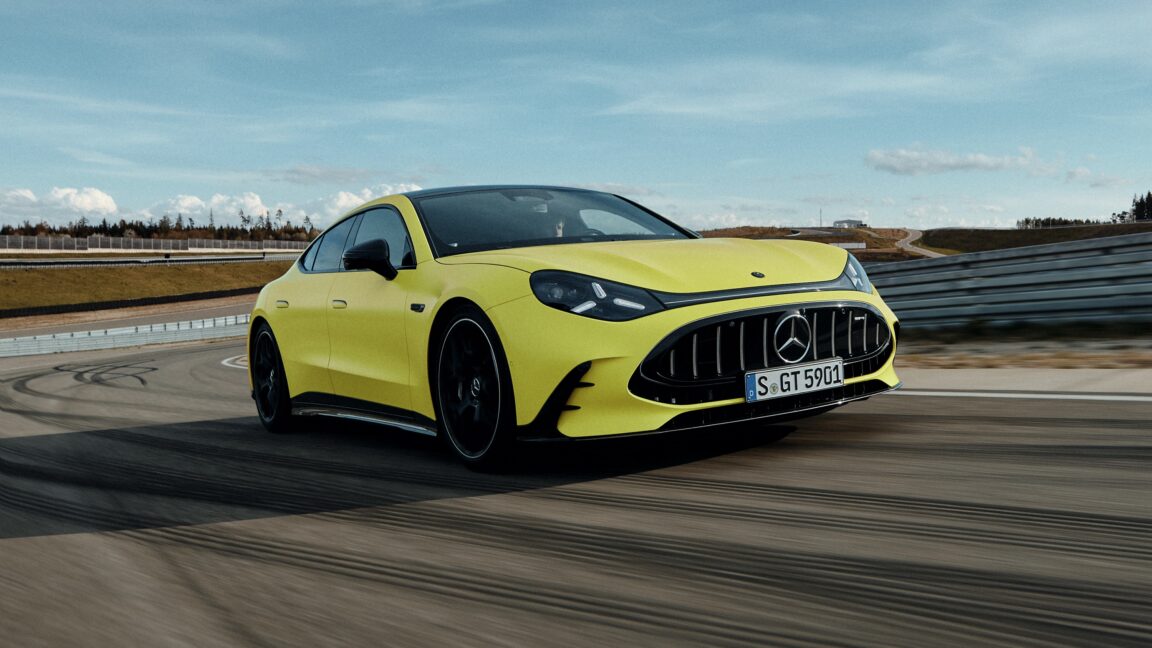
Mercedes-AMG has unveiled an all-electric version of its GT 4-Door sedan, marking the brand's shift away from traditional V8 engines in its performance lineup. The electric variant delivers acceleration metrics that rival its gas-powered predecessor while improving efficiency.
The EV achieves a 0-60 time competitive with previous generations, though Mercedes has not disclosed exact figures in available details. More notably, the vehicle demonstrates strong energy efficiency, measured in miles per kilowatt-hour. This metric matters because it reveals how far the car travels on a single charge relative to battery capacity.
The transition reflects broader industry trends. Traditional automakers face pressure to electrify performance segments as emissions regulations tighten globally and consumer interest in EVs grows. Mercedes-AMG previously relied on handcrafted V8 engines as a brand pillar. Moving that performance identity to battery-electric propulsion requires rethinking acceleration delivery, thermal management, and customer expectations around driving experience.
Electric powertrains offer distinct advantages in performance cars. Electric motors deliver maximum torque instantly, enabling rapid acceleration from a standstill. The low center of gravity from floor-mounted batteries improves handling dynamics. However, weight and thermal management of large battery packs present engineering challenges that traditional drivetrains sidestep.
The all-electric GT 4-Door positions Mercedes-AMG for the coming decade of transportation. Luxury buyers increasingly accept or demand electrification. Performance remains non-negotiable for the AMG brand. This car attempts to satisfy both demands simultaneously.
The specific efficiency and acceleration numbers carry weight for potential buyers evaluating whether an electric performance sedan can match the engagement of traditional high-powered engines. These metrics will determine whether enthusiasts embrace the electric transition or resist it as a dilution of AMG heritage.