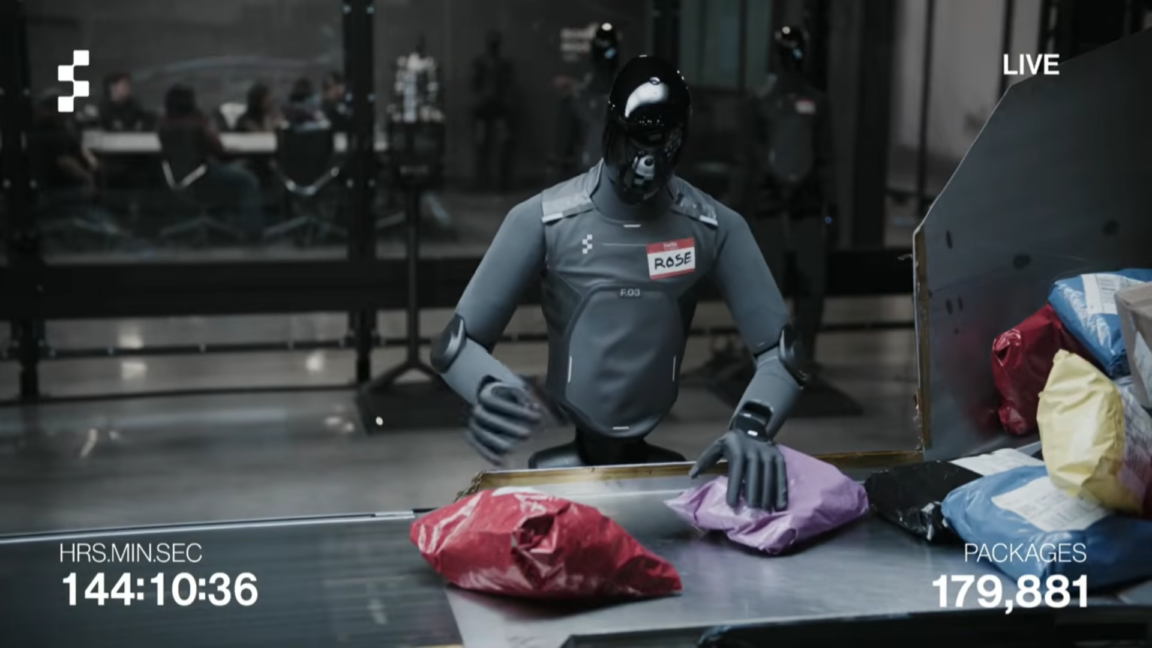
Figure AI launched a continuous livestream showcasing its humanoid robot performing warehouse tasks like sorting and moving packages. The broadcast has drawn sustained viewer attention, revealing public fascination with embodied AI systems performing real physical work.
The robot operates in a live environment, handling actual logistics operations rather than staged demonstrations. This approach differs from previous robot showcases that relied on controlled settings or pre-recorded footage. Viewers watch genuine task execution, including failures and adjustments, creating transparency around the technology's current capabilities and limitations.
Figure AI designed the livestream partly as a recruitment and investment tool, but the unexpected side effect has been viral engagement. The format taps into a basic human psychology: people find humanoid robots inherently compelling. This appeal transcends technical specifications or efficiency metrics. Watching a bipedal machine handle packages triggers something primal in viewers, combining curiosity about automation with anthropomorphic projection.
The livestream data reveals patterns in public perception. Viewers don't necessarily care whether the robot outperforms humans on speed or precision. They engage because the robot exists, moves, and completes tasks autonomously. This psychological pull matters for Figure AI's future. Public sentiment around automation often determines regulatory and investor confidence as much as raw technical performance does.
Figure AI operates in a competitive landscape with Boston Dynamics, Tesla's Optimus, and others racing toward commercial humanoid robots. Most competitors rely on highlight reels and controlled demonstrations. Figure's choice to broadcast continuous, unfiltered operation signals confidence but also reflects a smart marketing instinct. The livestream generates organic engagement without expensive ad campaigns.
The technical question remains whether continuous operation at scale becomes viable. Figure's robot currently handles structured warehouse environments with known layouts and repetitive tasks. Real-world deployment requires handling variability, unexpected obstacles, and complex problem-solving. The livestream shows progress, not mastery.
The public appetite for robot content suggests the humanoid robot