Redis launched Iris on Monday, a context and memory platform designed to solve a fundamental problem in enterprise AI systems. Agentic AI agents generate far more data requests than human users, but existing retrieval architectures cannot handle this volume at scale.
The issue runs deeper than performance. Retrieval Augmented Generation (RAG) systems work well for single-query scenarios. Agents, however, operate differently. They iterate rapidly, make dozens of requests per task, and need fresher data than traditional retrieval pipelines provide. Enterprise data sits scattered across multiple systems, structured for human consumption rather than machine parsing. This mismatch causes production agents to fail not because their underlying models are flawed, but because their data infrastructure collapses.
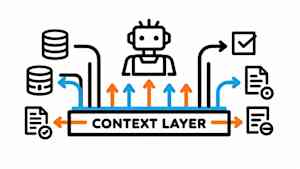
Redis Iris shifts from the RAG paradigm to what the industry now calls context architecture. Rather than retrieving information on demand for each query, the platform maintains a live, unified context layer that agents can query efficiently. It combines real-time data access with caching and memory management, letting agents operate at machine speed without waiting for retrieval bottlenecks.
This represents a broader industry shift. RAG solved the problem of making language models aware of current information without retraining them. But RAG assumed human-paced interactions. Agents operate at a different cadence entirely. They need persistent memory, faster recall, and the ability to reason across multiple data sources without latency penalties that would cripple their decision-making.
Redis positions Iris as middleware between agents and enterprise data layers. The platform handles the structural problem: translating data stored for human workflows into formats agents can consume quickly. It manages context windows efficiently, preventing agents from losing thread when executing multi-step tasks.
The timing matters. As enterprises move beyond chatbots to autonomous agents handling real business processes, retrieval architecture becomes a bottleneck. Companies investing in agent frameworks now face a choice