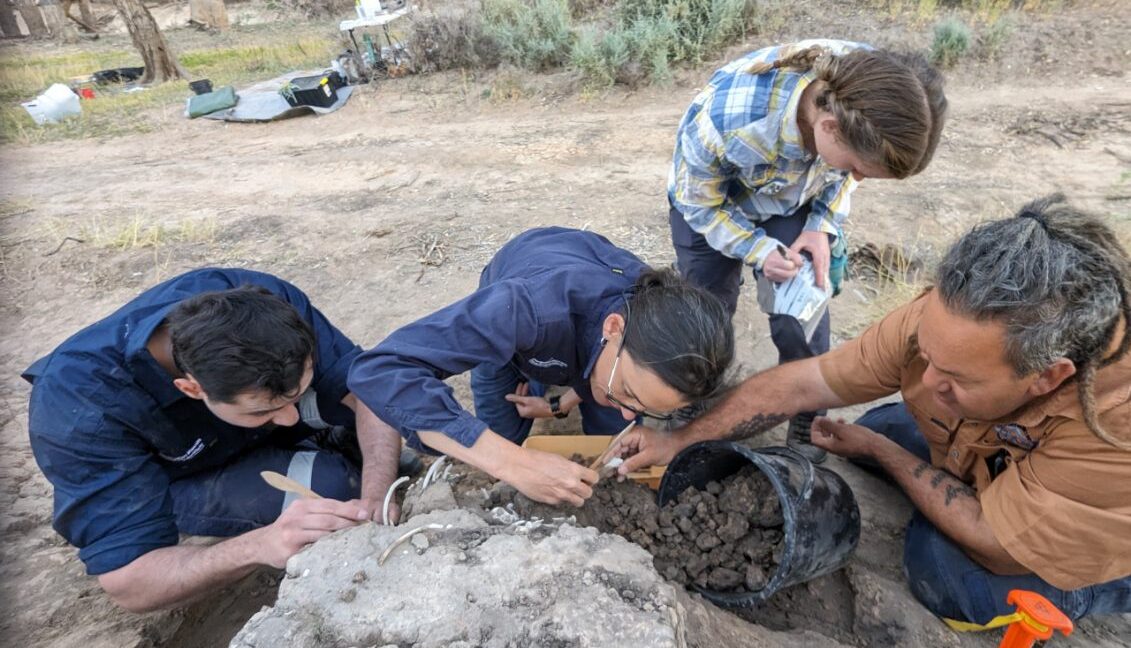
# Australian Aboriginals cared for a dingo's grave for decades
Archaeological evidence from the Gol Gol region near the Murray River in southeastern Australia reveals that Aboriginal communities maintained a dingo grave for several decades, suggesting these animals held significant cultural and familial status in ancient societies.
The discovery challenges assumptions about early human-animal relationships in Australia. Researchers found that a dingo burial showed consistent care over time, with evidence of repeated visits and maintenance to the grave site. This level of sustained attention indicates the animal was not merely a working dog but held deeper meaning within the community.
Dingoes arrived in Australia around 4,000 years ago, introduced from Southeast Asia. Over millennia, Aboriginal peoples integrated them into their societies as hunting partners and companions. The Gol Gol grave demonstrates this integration extended to ritual and emotional attachment.
The archaeological layer containing the burial dates back approximately 3,000 years. Analysis shows the grave received intentional care, with features suggesting deliberate placement and protection of the remains. This behavior parallels human burial practices within the same communities, implying dingoes occupied a status comparable to human family members in certain contexts.
Such evidence complicates Western narratives about ancient Aboriginal life that often minimize complex social bonds with animals. The Gol Gol discovery aligns with oral traditions and cultural knowledge passed down through Aboriginal communities, which describe dingoes as integral to kinship systems and spiritual beliefs.
The findings contribute to a growing body of research emphasizing the sophistication of Aboriginal ecological knowledge and relationship management. Rather than viewing dingoes as merely domesticated tools, the archaeological record indicates these animals existed within frameworks of reciprocal care and respect. This interpretation reflects Aboriginal perspectives that have long recognized animals as kin rather than property.
Continued investigation of similar sites may reveal additional evidence of this practice across Australia, offering deeper insight into pre-colonial Aboriginal