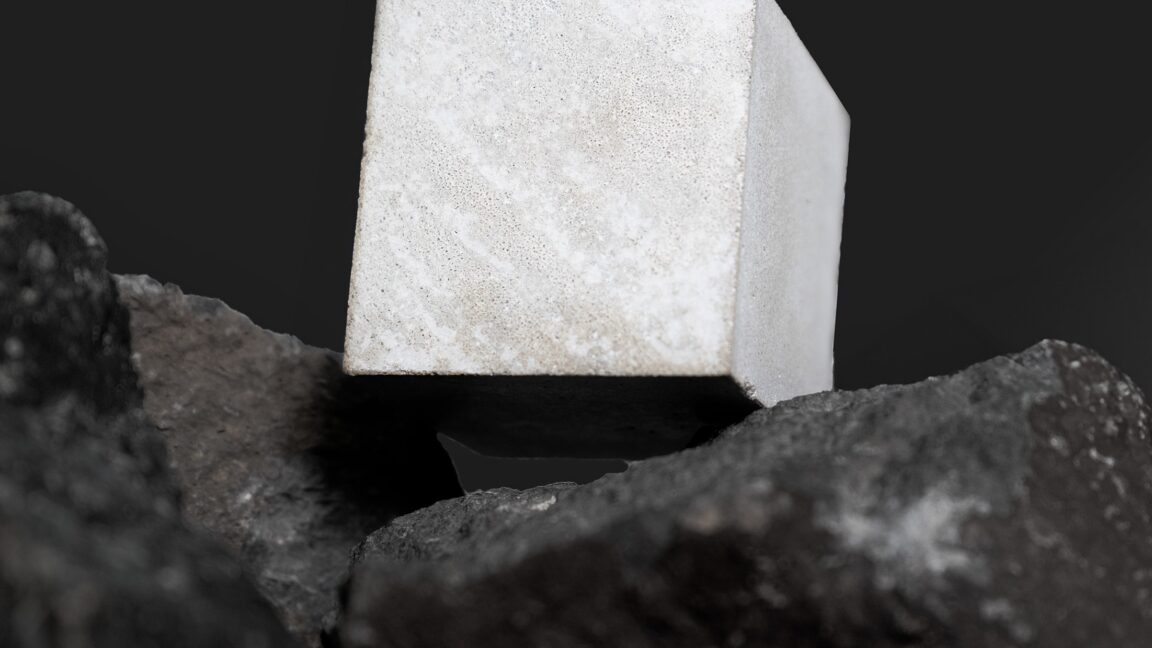
Researchers are exploring alternatives to limestone for Portland cement production, potentially reducing the carbon footprint of one of the world's most emission-heavy industries. Traditional cement manufacturing relies on heating limestone to over 1,400 degrees Celsius, a process that accounts for roughly 8 percent of global CO2 emissions.
The shift targets the fundamental chemistry of cement. Portland cement production splits into two critical steps: mining limestone and heating it to drive off carbon dioxide, then grinding the remaining clinker with gypsum. Each ton of cement produced generates approximately one ton of CO2, making the industry a major climate concern.
Scientists now investigate alternative rocks that contain calcium and silicon compounds similar to those in limestone but require less energy to process. Some approaches examine using industrial waste products like fly ash from coal plants or slag from steel mills. These materials already contain the necessary chemical composition for cement, eliminating the need for high-temperature calcination entirely.
Other research focuses on geologically distinct rocks found in certain regions. By adjusting processing temperatures or chemical treatments, researchers aim to achieve the same binding properties as traditional Portland cement while cutting energy consumption substantially.
The challenge involves scale and standardization. Cement specifications remain rigidly defined across construction codes worldwide. Any new material must meet performance standards for strength, durability, and setting time before widespread adoption becomes feasible. Testing facilities require years of data before certification.
Several companies and research institutions already pilot alternative cement formulations. Some projects reduce emissions by 30 to 50 percent compared to conventional Portland cement. The economics remain tight, however. Until carbon pricing becomes more aggressive or production costs drop significantly, cement manufacturers face limited financial incentive to switch.
The building sector accounts for roughly 40 percent of global emissions when accounting for cement, steel, and operational energy use. Decarbonizing cement represents one of the highest-impact climate opportunities available. Even modest shifts toward alternative materials across the