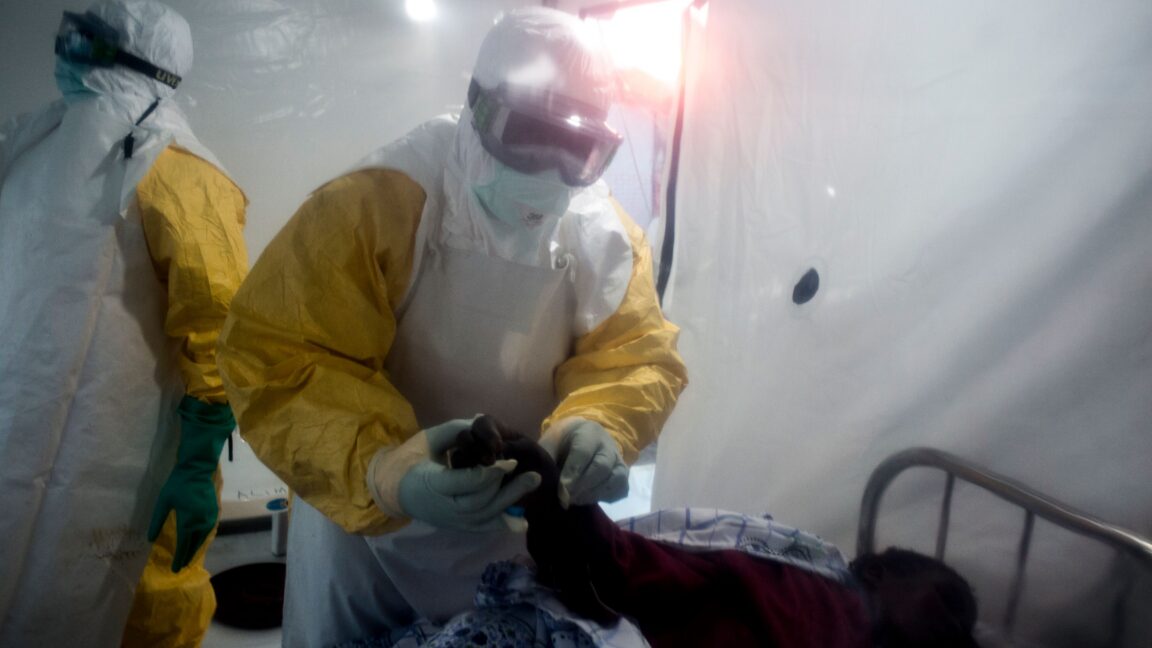
A new Ebola outbreak has erupted in Congo and Uganda, claiming 65 lives and involving an uncommon strain of the virus. The World Health Organization learned of potential cases on May 5, while the US Centers for Disease Control and Prevention reported receiving notice only recently, creating a gap in real-time disease surveillance that raises questions about outbreak detection and international coordination.
The strain involved in this outbreak differs from the more commonly documented variants. This distinction matters because virus mutations can affect transmission rates, severity, and treatment efficacy. Different strains respond differently to experimental therapies and vaccines already in development or deployment.
The timing of notification highlights a persistent challenge in global health security. The WHO's earlier awareness suggests either delayed reporting from local health authorities in Congo and Uganda or slower communication channels to US agencies. This lag could affect rapid response coordination, resource allocation, and the speed at which international health organizations mobilize containment strategies.
Ebola outbreaks demand speed. The virus spreads through direct contact with blood or body fluids of infected people or animals, making isolation and contact tracing critical. A delay in coordinated international response can allow cases to multiply exponentially, particularly in regions with limited healthcare infrastructure.
Congo and Uganda have experienced multiple Ebola outbreaks in recent decades. Both countries maintain some disease surveillance capacity, but communication gaps between regional health ministries and global health authorities persist. The CDC and WHO typically coordinate closely on outbreak response, so the discrepancy in notification timing suggests friction in existing information-sharing protocols.
The uncommon strain adds complexity. Researchers will need to sequence the virus quickly to understand its characteristics and whether existing vaccines provide adequate protection. Uganda has experience vaccinating populations during Ebola threats, but rapid vaccine availability depends on confirmed strain identification and WHO assessment.
This outbreak underscores a basic reality of epidemic preparedness: knowing what's happening on the ground depends entirely on how quickly and reliably