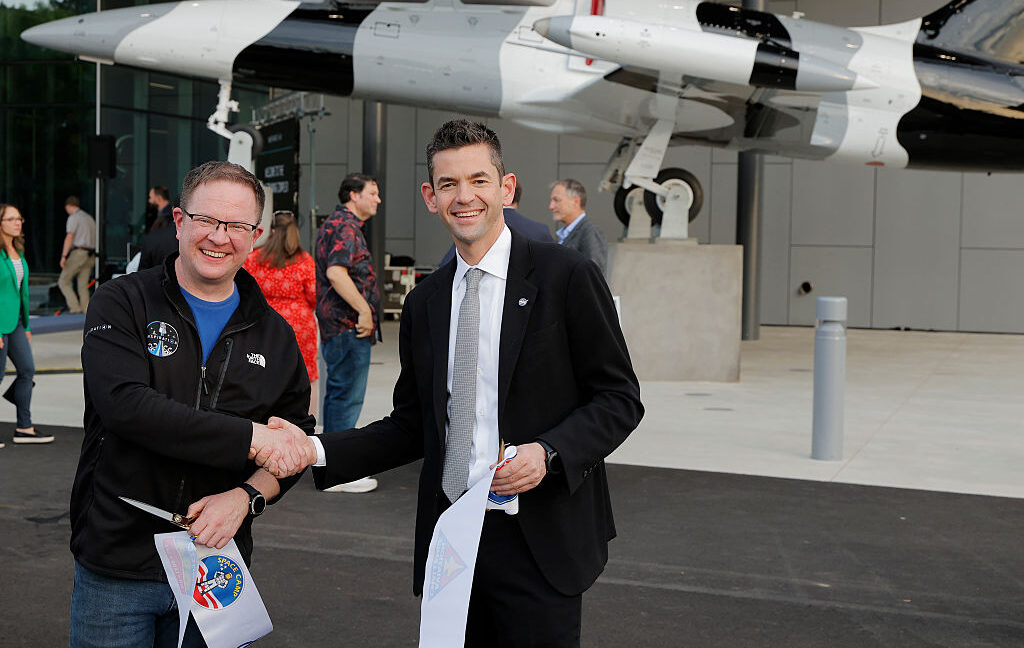
NASA's Artemis II mission appears to have sparked genuine interest in space exploration among young people. Registration at Space Camp, the Alabama-based training facility run by the U.S. Space and Rocket Center, doubled following the Artemis II test flight. The surge reflects how crewed spaceflight missions can drive youth engagement in STEM fields.
The timing matters. Artemis II, NASA's uncrewed lunar test flight, captured public attention with its high-stakes engineering and direct connection to human spaceflight goals. Rather than abstract science, young people saw a tangible achievement in rocket technology and mission planning. Space Camp capitalized on this momentum.
Billionaire entrepreneur Jared Isaacman contributed $25 million to fund new facilities at the center, accelerating expansion plans. The donation enables Space Camp to accommodate the surge in registrations and upgrade its programs. Isaacman has deep ties to spaceflight himself, having flown on SpaceX's Inspiration4 mission in 2021 and commanding the Polaris Dawn mission in 2024.
The data point reveals something practical about public interest in space exploration. Media coverage and successful missions do convert into measurable action. Young people sign up for hands-on training when they see the field advancing. This matters for the aerospace industry's talent pipeline.
Space Camp has operated since 1982, offering programs for students ages seven through high school. Participants experience astronaut training, mission simulations, and exposure to spacecraft. The doubling of registrations suggests families are willing to invest in this type of STEM education when cultural momentum exists.
The intersection of high-profile funding and mission success creates a multiplier effect. Isaacman's investment arrives when enthusiasm peaks, allowing the facility to expand before interest potentially plateaus. NASA's Artemis program continues development work toward crewed lunar missions in the coming years, so