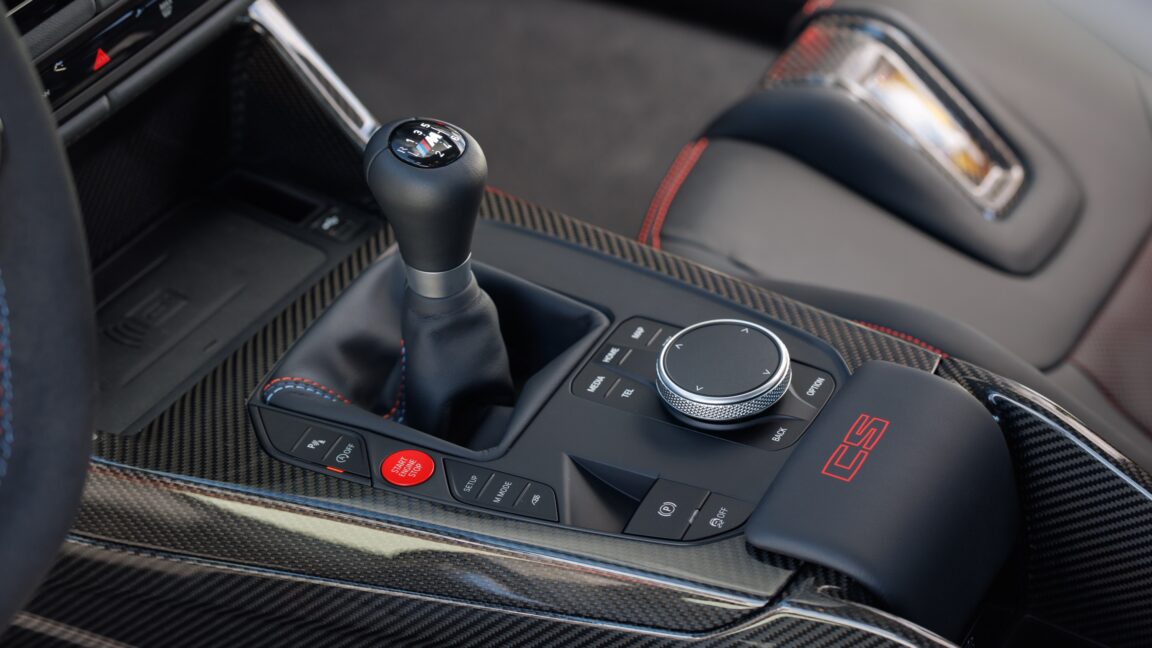
BMW introduces the final iteration of its sixth-generation M3 CS with a throwback to traditional driving mechanics. The 2027 M3 CS Handschalter arrives with a manual transmission and rear-wheel drive, marking a nostalgic send-off for the current generation before its successor launches.
The car sheds weight compared to its automatic counterpart, a practical benefit of the simpler manual gearbox architecture. The three-pedal setup stands out in an era when most high-performance manufacturers abandon manuals entirely. BMW positions this variant as a driver-focused alternative for enthusiasts who value mechanical engagement over convenience.
The Handschalter designation carries historical weight for BMW fans. The German automaker used this term decades ago for manual-equipped sport models, and reviving it signals intentionality rather than mere specification variation. The rear-wheel-drive configuration pairs naturally with the manual, avoiding the complexity of all-wheel-drive systems that dominate modern performance cars.
This release strategy differs from typical manufacturer playbooks. Rather than quietly discontinuing a generation, BMW gives the M3 CS a final hurrah with specification choices that align with enthusiast preferences. The lighter weight and direct mechanical connection appeal to drivers who view transmissions as integral to the driving experience rather than obstacles to automate away.
The timing matters. As electrification accelerates across the luxury and performance segments, manual transmissions have become endangered. Porsche offers manuals in select 911 variants. Lamborghini abandoned manuals entirely. BMW's decision to preserve the three-pedal option, even as a swan-song variant, acknowledges a persistent niche demand that persists despite industry-wide automation trends.
The 2027 M3 CS Handschalter represents something rarer than a high-performance sedan: a car that chooses mechanical simplicity at a moment when the industry