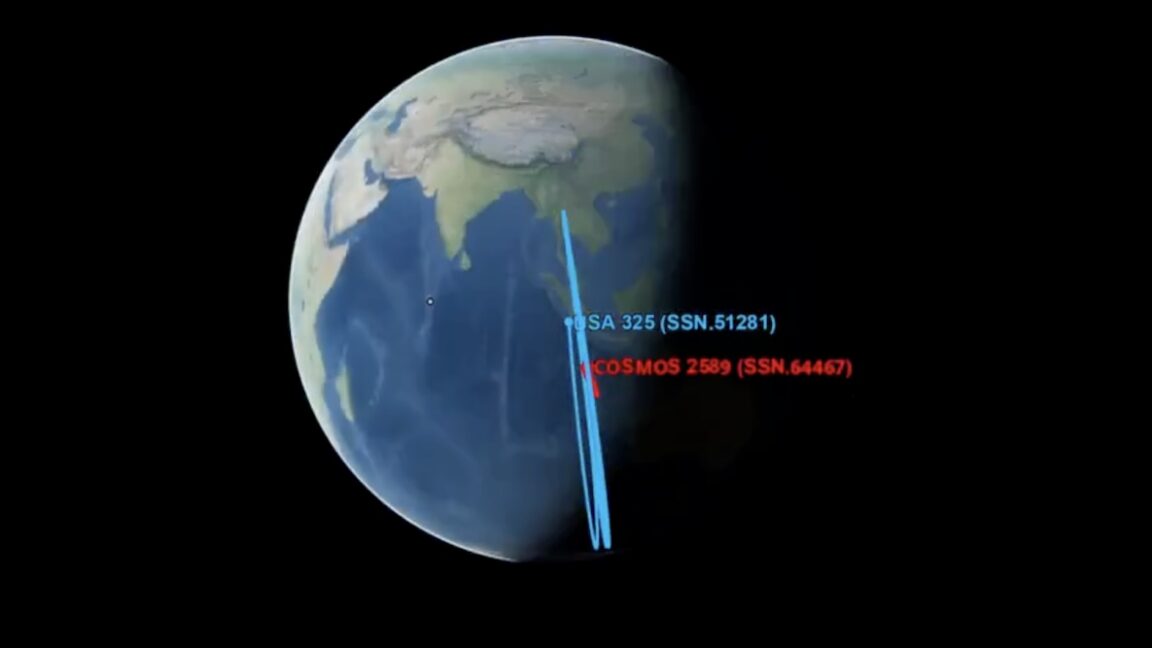
Russia has joined the US and China in developing satellite inspection and surveillance capabilities in geostationary orbit (GEO), according to recent observations. The development represents a significant shift in space competition, moving beyond traditional satellite operations into active orbital maneuvering.
GEO satellites occupy orbital slots roughly 22,000 miles above the equator, where they remain stationary relative to Earth's surface. This makes them valuable for communications, weather monitoring, and broadcasting. The presence of inspection spacecraft in this region raises tensions around space security and potential anti-satellite capabilities.
American and Chinese inspection satellites have operated in GEO for years. The US developed and deployed inspection capabilities as part of broader space situational awareness programs. China demonstrated similar abilities with its own orbital assets. Russia's entry into this arena suggests Moscow aims to match these capabilities and monitor foreign satellites within contested orbital territory.
The practical implications extend beyond surveillance. Spacecraft capable of closely approaching, observing, and potentially servicing other satellites could theoretically be weaponized. They could disable, damage, or destroy other nations' orbital assets, raising concerns about space warfare scenarios. This mirrors Cold War-era anti-satellite weapon development but in a new era where space infrastructure underpins global communications and military operations.
The technical challenge lies in orbital mechanics. GEO slots are crowded and valuable, with limited real estate allocated under international agreements. Maneuvering through this region requires precise control and coordination with existing operators. It also makes such activities visible to ground-based tracking systems and space surveillance networks.
The three-way competition reflects broader geopolitical tensions. Space has become an arena where US, Chinese, and Russian interests directly intersect. Each nation views space capabilities as essential to national security and economic competitiveness. The development of inspection satellites blurs lines between civilian space operations and military space activities.
International space law remains underdeveloped on this issue.