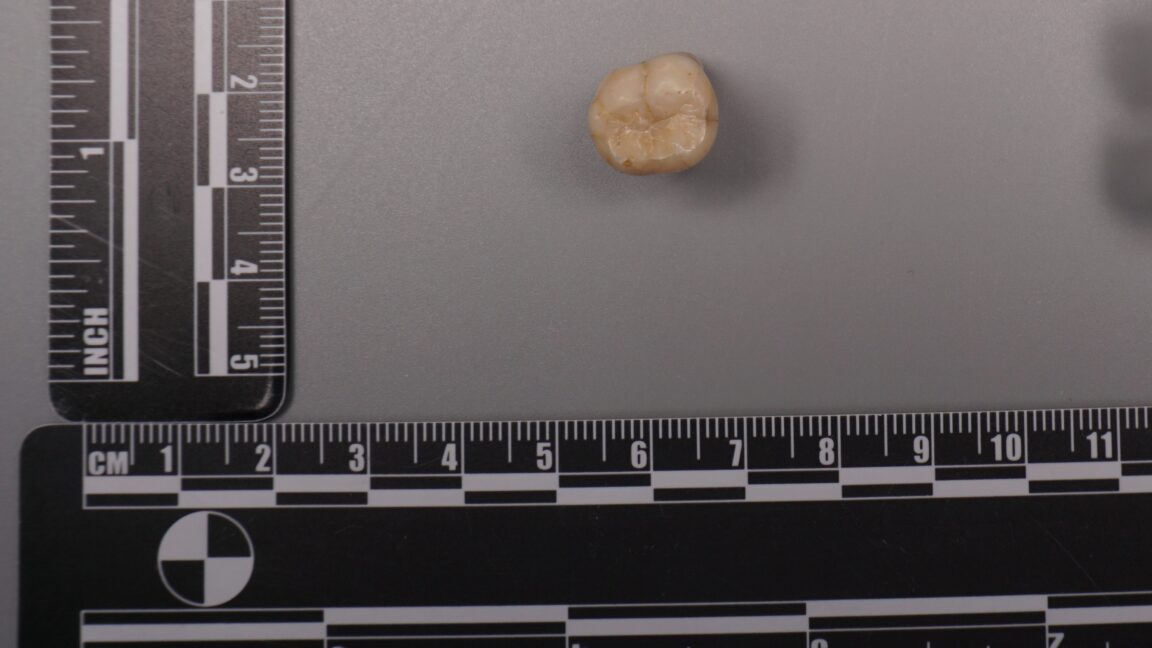
Researchers analyzing tooth protein from Homo erectus specimens have identified a distinctive protein variant that later appears in both Denisovans and modern humans. The finding provides fresh molecular evidence that Denisovans interbred with our ancestors and passed genetic material into the modern human lineage.
The study examined amelogenin, a protein critical for tooth enamel formation. Scientists detected a specific version of this protein in Homo erectus teeth dating back roughly 1.7 million years. This same variant resurfaces in Denisovan remains and persists in contemporary human populations, particularly among East Asian, Southeast Asian, and Oceanian groups.
The protein's presence across these three hominin species tells a clear story of genetic transmission. Denisovans, an extinct human species known primarily through DNA recovered from fossils in Siberia, interbred with early humans migrating into Asia around 50,000 years ago. Those encounters left lasting marks on modern human genomes. East Asians and Oceanian populations carry roughly 5 percent Denisovan DNA on average.
This amelogenin discovery adds a molecular dimension to what geneticists already knew from nuclear DNA analysis. Previous studies showed that some modern humans inherited genes from Denisovans that improve adaptation to high altitude environments and affect immune function. The protein evidence now extends this understanding to tooth biology itself, suggesting Denisovans passed along genetic variants affecting how our teeth formed.
What makes the finding notable is that researchers tracked a specific protein variant across millions of years of hominin evolution. Rather than relying solely on DNA sequences, the team examined the actual protein product that emerges during tooth development. This approach validates genetic findings through a different molecular pathway.
The research underscores how extensively our ancestors interbred with other hominin species. Modern humans are not pure products of a single lineage but rather mosaics