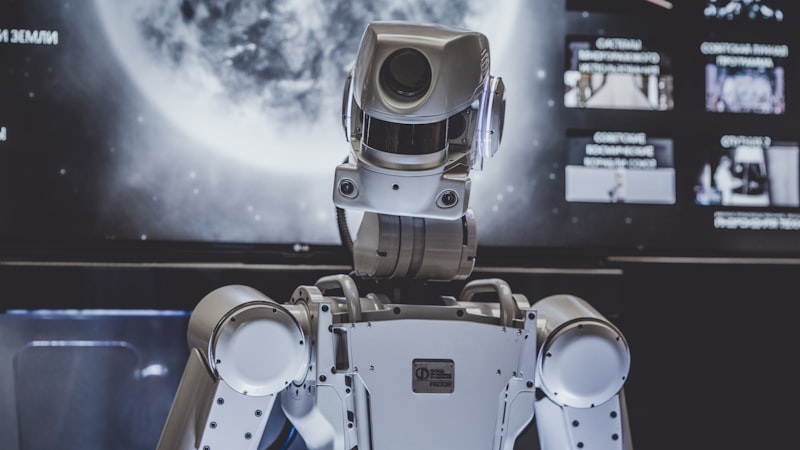
# AI Weekly Issue #472: 100 Years From Now - Future Lost in Translation
The central question driving this week's AI Weekly centers on a scenario that grows more plausible with each advancement in machine learning: what happens when AI systems become too complex for humans to comprehend?
Alexis, the newsletter's author, frames this as an existential problem beyond mere technical opacity. Today's large language models and deep neural networks already operate as black boxes. Engineers can train them, deploy them, benchmark them, but explaining *why* a specific output emerged from billions of parameters remains largely impossible. Scale this problem across a century, and the implications compound.
The piece builds on feedback from last week's "Museum of Human Effort" essay, suggesting readers engaged seriously with themes about human obsolescence and technological displacement. This iteration digs deeper into the epistemic problem: losing the ability to understand our own tools.
The stakes are practical, not philosophical. If AI systems control critical infrastructure, medical diagnosis, or resource allocation, and those systems operate beyond human comprehension, accountability collapses. You cannot debug what you cannot understand. You cannot predict failure modes in systems whose decision-making remains opaque. You cannot hold machines accountable for harm.
The 100-year timeframe matters deliberately. It suggests that interpretability may not be a solvable problem in principle, only a temporary advantage we hold now before complexity overtakes our analytical capacity. Current research into explainable AI and mechanistic interpretability addresses today's models. But these techniques may not scale to systems orders of magnitude more complex.
The column doesn't offer solutions, but it reframes the interpretability debate as urgent. Technical progress without understanding creates dependency masquerading as innovation. We build systems we cannot fully supervise, then deploy them anyway because the alternative, economically and competitively, feels impossible.
This touches the core anxiety driving AI discourse: not