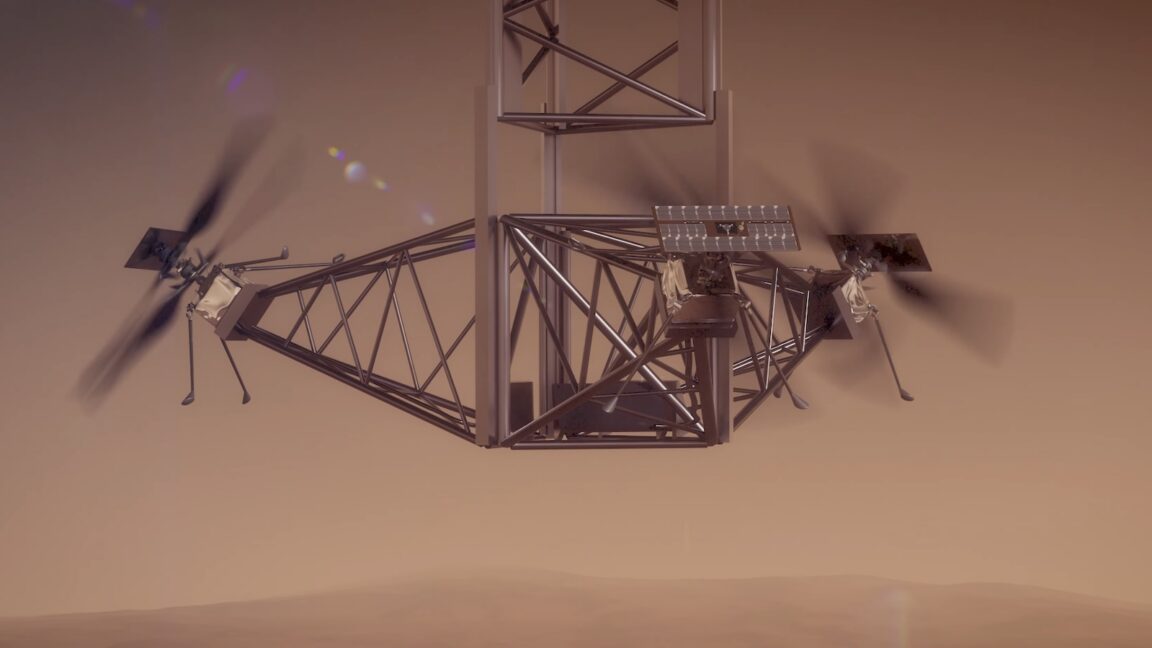
NASA's Jet Propulsion Laboratory achieved a critical engineering milestone with rotor blades that survive supersonic-speed rotation without structural failure. Testing confirmed the blades maintain integrity at speeds where centrifugal forces would typically cause catastrophic disintegration.
The breakthrough addresses a fundamental problem in compressor and turbine design. Rotor blades spinning at supersonic velocities experience extreme stresses, with centrifugal forces pulling outward with tremendous force while aerodynamic loads compress them inward. Previous blade designs would fail under these competing pressures, shattering or delaminating.
JPL's new rotor technology employs advanced materials and structural designs that redistribute stress more efficiently across the blade. The approach prevents stress concentration at failure points, the weak spots where conventional blades crack. Testing protocols simulated real operating conditions, pushing the rotors beyond normal speeds to verify safety margins.
This development has direct applications in next-generation propulsion systems and compressors. Smaller, lighter rotors operating at higher speeds enable more efficient engines for spacecraft, aircraft, and industrial turbomachinery. The technology could reduce engine weight while boosting power output, a trade-off critical for space missions where every kilogram counts.
The breakthrough also applies to atmospheric applications. Commercial aviation and power generation both depend on compressor efficiency. Higher-speed rotors mean smaller engine packages, lower fuel consumption, and reduced emissions. Turbine manufacturers will likely adopt similar principles for wind energy systems.
JPL's work represents years of computational modeling, material science research, and iterative testing. The team identified specific alloy compositions and blade geometries that handle the physics of supersonic rotation. Documentation of this process will accelerate adoption across the aerospace and energy sectors.
Near-term applications include advanced air-breathing propulsion for hypersonic vehicles and improved compressors for deep-space exploration equipment. The technology removes a long-