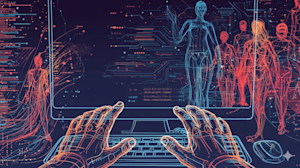
Brox, a predictive human intelligence startup, has built 60,000 digital twins of real people to solve a critical problem in market research. Traditional surveys take 12 weeks. In an era where TikTok videos reshape brand perception overnight, that timeline is obsolete.
The company's synthetic audiences allow Fortune 500 companies to test messaging, product ideas, and campaigns instantly and repeatedly against AI-generated but behaviorally authentic respondents. Instead of waiting weeks for survey results, brands can iterate in hours. The digital twins are trained on real demographic, psychographic, and behavioral data, then deployed to answer questions with the statistical reliability of actual human surveys.
This addresses a fundamental business pain point. Market research data frequently arrives too late to inform rapid decision-making during volatile economic or geopolitical shifts. A competitor's product launch or a social media crisis demands faster intelligence than quarterly research cycles provide. Brox's approach compresses that feedback loop dramatically.
The technology represents a significant shift in how companies validate ideas before investing in production, marketing, or distribution. Rather than recruiting respondents, waiting for responses, and analyzing results, product teams can query their digital twins across hundreds of scenarios in real time. Companies can test multiple creative variations, messaging angles, or product features simultaneously.
However, this raises questions about data accuracy and bias. Digital twins are only as reliable as their training data. If the underlying datasets skew toward certain demographics or behaviors, the synthetic audiences will replicate those biases at scale. Privacy concerns also surface when AI models are trained on real human data, even if aggregated and anonymized.
Brox's recent funding round suggests investor confidence in the synthetic audience market. The startup positions itself at the intersection of AI, behavioral science, and business intelligence. As generative AI matures, synthetic respondents could reshape not just market research but user testing, A/B testing, and customer feedback loops