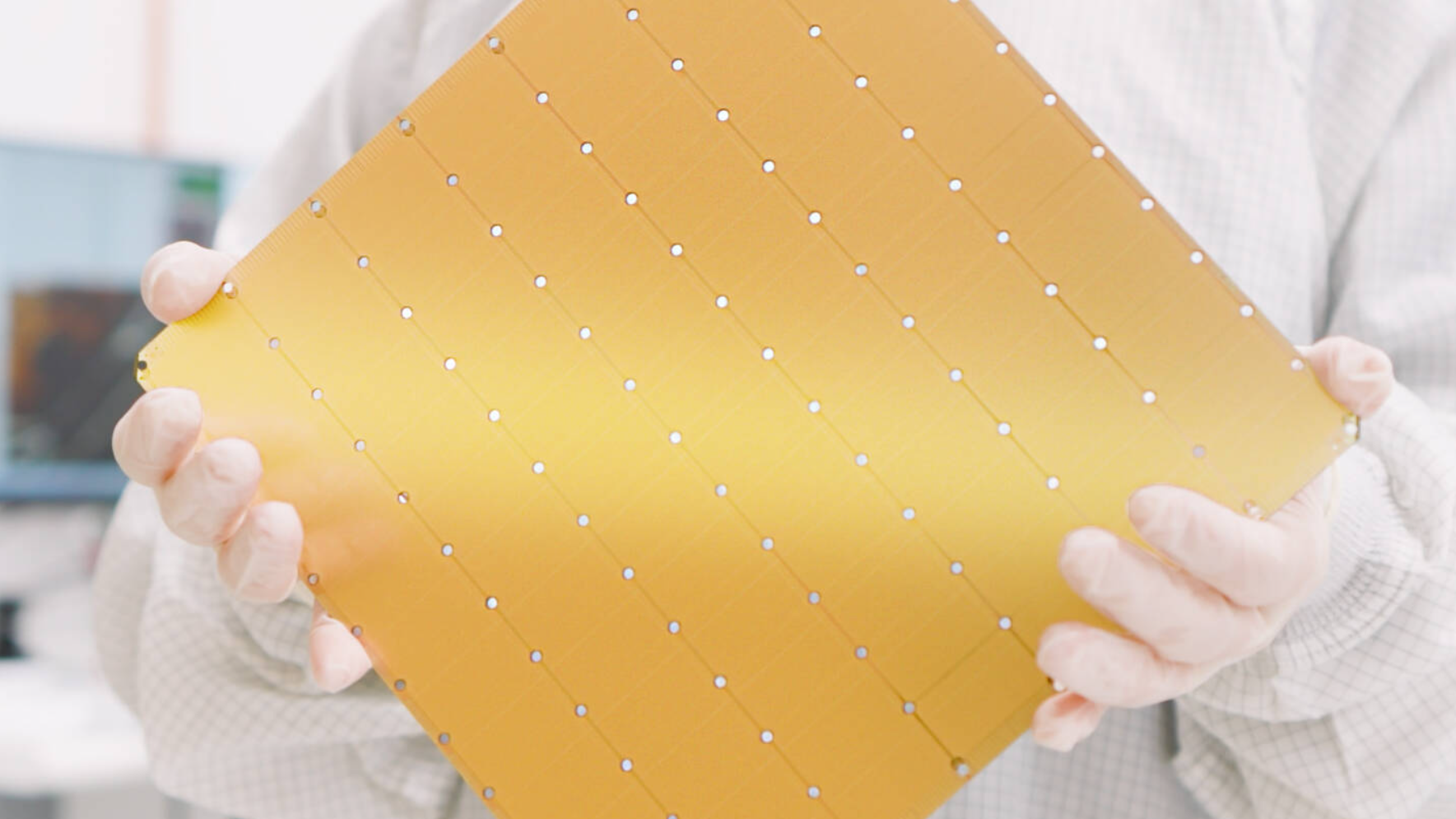
Cerebras Systems is moving forward with a second IPO attempt, targeting a $40 billion valuation. The AI chip maker plans to list on Nasdaq under ticker CBRS, with its IPO roadshow beginning Monday and share prices targeted between $115 and $125, according to reporting from Reuters.
This marks Cerebras' return to public markets after a previous IPO attempt. The company develops specialized processors designed for AI workloads, competing in a heated market alongside established players like Nvidia and newer entrants building alternatives for generative AI training and inference.
Cerebras builds the Wafer-Scale Engine, a massive processor designed to handle large neural networks efficiently. Unlike traditional chips that break computations into smaller pieces, the WSE integrates more processing power on a single wafer, reducing data movement and latency. The architecture targets a specific problem in AI training: the computational bottleneck created by moving data between chips.
The $40 billion valuation reflects investor appetite for AI infrastructure plays despite skepticism about chip startups' ability to compete with entrenched manufacturers. Cerebras faces real technical challenges. Its approach requires specialized manufacturing partnerships and software optimization to justify premium pricing. The company must demonstrate its processors deliver measurable performance improvements and cost advantages in real-world AI applications, not just benchmarks.
Timing matters here. AI infrastructure investment remains robust, but the market has grown skeptical of hype-driven startups. Cerebras needs to show customers actually want its technology. Early wins include partnerships with research institutions and cloud providers, but mainstream enterprise adoption remains limited.
The IPO prices success against Cerebras' core claim: that specialized chip architectures can outperform general-purpose GPUs for specific AI tasks. If the company can prove this in production environments, investor capital provides runway to scale. If not, a $40 billion valuation becomes increasingly difficult to justify